The Pardy School of Law
How the law works, and how it doesn’t.
Alberta Constitution and Systems Series: What if a constitution started from the opposite premise—that the state may do nothing except keep the peace, run courts, and hold the border? On this episode of At Home with Holmes, law professor Bruce Pardy makes that case and writer-commentator Matthew Ehret tests it: is “common good” a license to override, or the only language we have for defence, fraud that isn’t a fistfight, and the cartels already in place? Listen in before the next referendum writes the rules for you.
Is Canada holding Alberta back? Professor Bruce Pardy is blunt: “The rest of Canada is dragging it down.” But independence isn’t freedom if Edmonton just replaces Ottawa. On Sovereign Voice with podcaster Nadine Wellwood, Pardy argues for flipping the default—government gets only specifically defined powers, not open-ended control over your life. Building something different is the real question. Would Alberta create a freer country—or rebuild the system it wanted to escape?
The Real Citizen podcast with guest Bruce Pardy: Professor Pardy identifies Canada’s core problems as inevitable, built into the country’s basic design and culture from the start—not temporary policy mistakes or bad luck. The issues, he contends, are internal and constitutional: a system centered on government monopoly control, protected industries, and defining itself against the United States. This setup blocks competitive vitality, and the honest reflection and adaptability needed to fix things. Alberta separatism offers a rare potential disruption to Canada’s crown-driven, cartel-like system of governance and established powers, but how can it succeed when the independence movement is being systematically undermined by entrenched political interests (including Alberta’s leadership) and stymied by a deliberately weak, delayed referendum process with multiple off-ramps?
Modern Censorship Doesn’t Work the Way You Think
Natasha Montreal podcast: In this conversation, law professor Bruce Pardy breaks down the ways in which governments are quietly tightening the screws on what we can say—through regulators, administrative bodies, professional colleges, and vague laws like Bill C-9. He digs into compelled speech, the real limits of free expression, and how the growing regulatory state can choke off freedom without ever outright banning it.
Bill C-34 Is Just A Symptom Of A Much Bigger Problem
Bruce Pardy joins Nico Lagan to discuss Bill C-34, the Digital Safety Act, the proposed Digital Safety Commission of Canada, and the apparatus behind it. What starts as a conversation about online safety, harmful content, age verification and internet regulation becomes a deeper discussion about unelected commissions, delegated authority, bureaucratic power, the managerial state, COVID, censorship, Alberta independence, and whether Canadians are fighting the wrong battle. The real issue may not be one bill.
WATCH
The Lavigne Show with guests Bruce Pardy, Dennis Kalma, & Matthew Rowley
What if our constitutions got it completely backwards?
Instead of starting with “government exists for the common good/general welfare” (aka unlimited power with a few polite exceptions), what if we flipped it?
Government should be powerless… EXCEPT for:
• Resolve disputes
• Protect the country’s borders and security
• Anything not on the list - Not their job
Bruce Pardy nails it: We have to design constitutions assuming that the people running the state will eventually be the wrong people — ambitious, self-interested, or just mediocre. Not saints. Not visionaries. So give them almost nothing to work with.
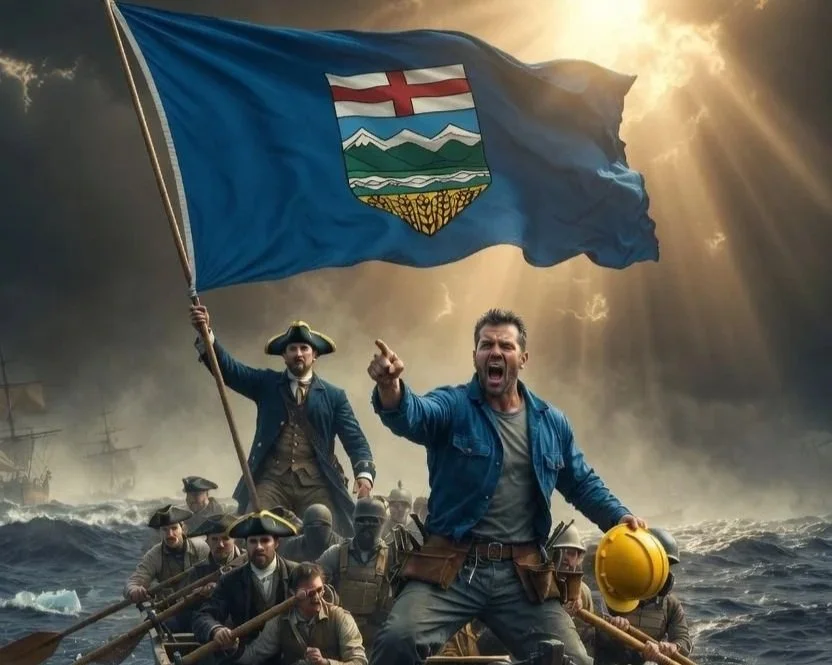
No Independence Without Revolution
Bruce Pardy and Brave New Normal host Jason James
The 10th question on the Oct. 19 provincial referendum is a double-barreled trap favoring the status quo. Liberation requires rejecting the trap entirely and embracing the disruption inherent in breaking from a dysfunctional federation. Without that mindset shift, says Professor Pardy, the status quo persists.
If you want change, “you want disruption because you know the situation that you’re in is not working. If your objective is to keep things mostly the same, then what is the point of this?” ~ Bruce Pardy
What does that mean for Alberta independence?
No political saviors. Success historically comes from organized, persistent citizen action that forces or replaces reluctant elites, not hoping current ones will deliver despite their statements and actions. Albertans must shed Canadian risk-aversion and preference for middle-ground “naive” federalism.
Can Albertans unpack the Canada they carry in their psyches in order to pack up and leave?
WATCH
“If you are a free person, if you live in a free country, then your property is an extension of that liberty.” ~ Bruce Pardy
Canada keeps drifting ... away from a free society toward one where the state and competing claims increasingly interfere with what you “own.” Once more of us understand that property is an extension of personal liberty and the foundation of a free economy and society, the pushback becomes real. Leaders of the Frontier host, David Leis, in conversation with Professor Bruce Pardy.

Do Canadians Really Own Their Property?
Law professor Bruce Pardy, in a recent interview with Bridge City News, explores the “category error” in Canadian law.
WATCH

Danielle Smith, Killing Alberta Independence? Bruce Pardy on the 10th Question: The referendum setup scheduled for October creates a double standard: Remain wins once and it’s over; Leave must win twice. Where does that put the momentum for a new Alberta? Professor Pardy walks through the current reality with podcaster Nadine Wellwood.
WATCH
The Canadian Real Estate Investor — host Daniel Foch in conversation with Bruce Pardy. Canadian law remains dangerously unclear on how Aboriginal title intersects with private fee simple ownership, leaving landowners, investors, and Indigenous groups in limbo. The Supreme Court of Canada recently declined to hear an appeal by the Wolastoqey Nation regarding Aboriginal title on privately held lands in New Brunswick. Contrary to some headlines, it neither endorsed nor rejected the lower court’s view that private owners likely wouldn’t lose their land outright if Aboriginal title is proven—instead, Indigenous groups would seek compensation from the Crown. As a non-binding provincial decision without a full trial on title, it resolves little. Courts have built extensive Aboriginal title jurisprudence yet dodged the core conflict: both systems claim exclusive control over the same land. In British Columbia, modern agreements granting title or governance powers over areas with private property have created overlapping authorities without clear priority rules, eroding market confidence and investment. Governments exacerbate the problem by publicly championing private property while embedding UNDRIP and expanding Section 35 collective rights, which establish distinct categories of citizenship with unequal entitlements. Ultimately, argues law professor Bruce Pardy, this two-tier constitutional approach clashes with equal individual rights and fuels endless disputes. The result is a growing crisis of confidence in Canada’s property rights regime—economic drag, political tension, and unresolved reconciliation trade-offs—with courts and politicians failing to deliver clarity.
The J.D. Irving, Limited et al. v. Wolastoqey Nation Case
Leaders on the Frontier: The New Brunswick Aboriginal lands case is a landmark legal challenge where six Wolastoqey First Nations sought Aboriginal title to more than half of the province’s land along the Saint John River watershed, including lands owned by seven private companies. The private owners successfully moved to be struck from the claim, arguing no direct cause of action against them (their lands were acquired under Crown grants and fee simple title). The initial judge released the companies as defendants but explicitly allowed the First Nations to continue claiming Aboriginal title against the Crown for those same private lands. First Nations sought leave to appeal to the Supreme Court of Canada, but the SCC dismissed the leave application with no reasons provided. This is the core peculiarity: initially celebrated as the SCC “upholding property rights" is an overreading. Dismissing leave does not endorse the lower decision, affirm private property’s priority, or create binding nationwide precedent. It simply means the SCC declined to hear this specific, procedurally messy appeal. The New Brunswick Court of Appeal ruling stands as the last binding word on this case, but it leaves the bigger clash unresolved. And what a clash it is: Law professor Bruce Pardy walks through the deeper challenges in balancing historic claims with modern property law and equal citizenship. The New Brunswick case, in its procedural quirks and limited resolution, perfectly illustrates the need for fundamental clarity rather than kicking the can down the road. Is Canada courageous enough to confront entrenched ideas and institutions that lead to stagnation, reduced investment, and social division?
The Deck is Stacked
Tea & Coffee with Paula & Jay (The Lavigne Show): Alberta faces a stark reality—is it possible to become independent if your premier is determined to stop it? Is the October question a procedural dead end dressed up as progress? Law professor Bruce Pardy examines the controversial 10th question scheduled for the upcoming referendum, comparing it to a Brexit-style vote in which voters were asked only whether they wanted a future vote on leaving—a vote that political elites could then delay or bury. What should Premier Danielle Smith have done instead? According to Pardy, she should have announced a clear independence referendum for spring 2027 on its own ballot, begun consultations immediately to reduce the risk of court challenges, and taken ownership of the process. Instead, he argues, the government has created confusion, complexity, and multiple escape hatches for the anti-independence side. That leaves Albertans facing a difficult question: what path forward will actually lead to a decision on independence?
Does Indigenous Land Title Override Your Property?
Bridge City News: This message cannot be emphasized enough: Canadians do not truly own their land outright. Property, explains law professor Bruce Pardy, is merely a collection of legal rights—and those rights exist only as long as governments and courts choose to uphold them.
A growing power struggle between Indigenous title claims and private ownership has left Canadians unsure who ultimately controls the land beneath their feet as the country drifts further into constitutional uncertainty. Challenging the philosophical core of Canada’s modern legal framework on Indigenous rights, Prof. Pardy argues that Canada abandoned the principle of equal treatment under the law and opened the door to permanent legal conflict and social division when it assigned different legal rights based on ancestry and identity. The result is a steady dismantling of the centuries-old principle that a person’s home is their private domain, free from outside interference. Not in Canada.
“This independence movement in Alberta is really like a moment in time that doesn’t come up very often in the life of civilizations. Alberta has the potential to… correct the path of Western civilization… If it is missed, it won’t come back again for a long time.” ~ Bruce Pardy
Nat & The Guy: Rather than reforming a captured system—doomed to fail like “Lucy and the football”—law professor Bruce Pardy proposes a radically streamlined constitution for an independent Alberta that flips the default: the state can do nothingexcept keep the peace, resolve disputes through courts, and defend the territory. Everything else—healthcare, education, welfare, regulation—must emerge from voluntary cooperation, markets, and responsible citizens. By structurally disempowering the state to ensure it isn’t worth “capturing,” Prof. Pardy’s vision calls the bluff on “freedom” rhetoric. Confronting hard questions like corporate personhood and the illusion of nanny-state compassion, the goal is to restore genuine political independence rooted in individual responsibility, voluntary community engagement, and the market provision of services as a defense against the state overreach that has derailed the West. The question for Albertans is whether they’re prepared to embrace that liberty, with all its attendant responsibilities, or if the insidious comfort of the managerial state will drain the moment of its revolutionary pulse.
The Decision to Quash Alberta’s Secession Referendum Process
Tea & Coffee with Paula & Jay (The Lavigne Show): Professor Bruce Pardy breaks down the decision by Justice Shaina Leonard to halt — for now — the grassroots push that collected signatures from tens of thousands of Albertans eager to force the question of separation onto the ballot.
This is the second major judicial roadblock under the Citizen Initiative Act. The latest ruling is more revealing — not because of any grand conspiracy, but because it perfectly illustrates how institutions and officials instinctively default to preserving the status quo when Alberta independence is on the table. The decision also exposes deeper problems with the CIA itself.
The bottom line, says Prof. Pardy: The CIA process was never necessary! The Premier and the provincial government already possess the clear legal authority to place an independence question on the ballot at any time, on their own initiative. They have simply chosen not to. Instead, they have directed citizens to jump through the hoops of a flawed statute that the government itself refuses to fix or bypass. That choice has now produced exactly the outcome critics warned about: two successive court defeats, months of delay, and another public demonstration that the system is stacked against even asking the question.
The petition drive has provided the clear evidence that hundreds of thousands of Albertans want the chance to weigh in on independence. The signatures gathered give the government more than enough political cover to act: Albertans deserve their say. Danielle Smith and her cabinet could schedule a clear, constitutionally robust referendum question for a date after October 19 — timing that would better satisfy the Clarity Act’s requirements and the Supreme Court’s guidance on secession referendums. The ball is squarely in the Premier’s court.
Alberta deserves a bold new beginning as a truly free nation, and Bruce Pardy’s visionary “Articles of Freedom” provides the radical constitutional blueprint to make it happen.
C2C Journal | Author Interview Series | Articles of Freedom with Bruce Pardy: Instead of inheriting Canada’s failing managerial state—with its unlimited government power, activist courts that twist rights, entrenched special interests, and divisive identity-based privileges—an independent Alberta should start from the opposite premise: the state is powerless except for the narrow, explicit duties granted to it, primarily to prevent force and fraud while keeping the peace. Bruce Pardy elaborates on his vision for a new constitution for an independent Alberta, identifying 13 key provisions that he believes should form the foundation of its architecture. Central to his argument is the principle that freedom means the absence of coercion, whether from individuals or the government. He emphasizes that the state should not use force against its citizens except to enforce laws that protect individuals from coercion by others. This approach would eliminate laws that impose regulations on personal behavior, such as mandatory helmet laws for cyclists, speech restrictions, or endless regulations that micromanage lives. Courts would be disempowered through elected judges with limited terms, preventing judicial tyranny, while every person is treated as an equal individual under blind justice, rejecting race-based Aboriginal rights that contradict genuine liberty and have failed the very people they claim to help.

Nadine Wellwood with guest Bruce Pardy: Property is Rights! Prof. Pardy delves into the intricate nature of property law in Canada, illuminating a fundamental yet often misunderstood concept: property is not merely a tangible object but a set of rights. This distinction is crucial for understanding the legal framework governing ownership. While Canadians may hold a “fee simple” title, which is the most extensive estate in terms of land, it’s important to recognize that this title is not absolute. Prof. Pardy emphasizes that the state retains the power to revoke property rights at will, provided it follows proper legislative procedures. This precarious legal landscape allows for the infringement of property rights through expropriation, regulation, and taxation, all justified under the guise of serving the public good. Prof. Pardy argues that rights, such as property and contract rights, are essential for maintaining individual sovereignty because they allow people to make decisions about their lives and resources. Reframing the discussion around governance, legitimacy, and individual rights, he calls for a critical reevaluation of how society defines and protects personal freedoms in the face of collective pressures.
Topics Covered: Do you really own your property in Canada? • What “fee simple” actually means • The Crown, land, and legal hierarchy • Property rights vs contract rights • Why the “common good” can undermine liberty • Democracy vs individual freedom • State legitimacy and why the system persists • Alberta independence and constitutional reset • Treaties, UNDRIP, and equal application of the law.
WATCH HERE
Tea & Coffee with Paula & Jay, and guest Bruce Pardy: The Ontario Court of Appeal’s dismissal of Dan Hartman’s lawsuit over the death of his son Sean, 33 days after receiving the Pfizer-BioNTech COVID-19 vaccine, highlights a profound irony in public health governance. While the government aggressively projected itself during the pandemic as the ultimate guarantor of public safety—urging, pressuring, and in many cases mandating vaccination as a civic duty and life-saving measure—it can simultaneously assert in court that it owes no specific duty of care to individuals harmed by those very policies. The Appeal court’s ruling rests on the legal doctrine that broad public health decisions are shielded from liability, akin to policy choices like resource allocation, so the state cannot be held accountable even for tragic individual outcomes. To effect meaningful change, says law professor Bruce Pardy, there must be a broader societal and legal discourse that questions the foundational premises of governmental authority in public health decision-making.
“Your Land,” a conference on “Property Rights, Land Use, and Constitutional Authority in Canada,” April 11. Hosted by Upper Canada Land Titles and Patent Research Initiative.
At the heart of our constitutional rights lies a profound truth: your life and property are fundamentally yours, not the state’s. These rights were designed to empower individuals, granting them the autonomy to determine the use of their property without interference from the collective good. So, what happened? Law professor Bruce Pardy traces the historical journey of rights and governance to where we find ourselves now: overshadowed by a narrative that prioritizes the collective over the personal, undermining the very freedoms that were meant to liberate us from tyranny. A reevaluation is necessary; we must envision a new constitution that truly safeguards individual liberties, ensuring that the power of the state does not eclipse the sanctity of personal ownership and freedom.
WATCH HERE [Bruce Pardy appears at the 3:49:27 mark]
Related Reading: Canada’s Constitutional Mistake: How the Rule of Law Gave Way to the Managerial State
Blendr News: Canada is not merely mismanaged; it has been fundamentally rebuilt into an authoritarian, declining system characterized by “anarcho-tyranny,” argues law professor Bruce Pardy. In an expansive conversation with host Liam DeBoer, Prof. Pardy charts the country’s shift from the impartial rule of law to a selective “rule by law” that prioritizes bureaucratic control, progressive ideology, and group-based equity over individual rights, equality, and freedom. Overrun by cartel-like protected industries, captured institutions, and human rights codes that weaponize discrimination claims, Canada faces irreversible decline. Yet, not enough Canadians see the extent of the rot, preferring instead to accept or even demand expanding state intervention. What took root in Canada to drive this outcome? If a course change isn’t possible without radical reform, where will change come from, and how can Canadians who reject the status quo resist the country’s crisis of dysfunction?
The Supreme Court Will Just Make Stuff up to Subvert the Notwithstanding Clause
NP Full Comment Podcast | Brian Lilley in conversation with Professor Bruce Pardy.
“The dispute over the Notwithstanding Clause reflects two bad choices, be ruled by courts or be ruled by legislatures. In Canada, neither institution tends to protect individual freedoms.” ~ Bruce Pardy
If you think the Supreme Court will hesitate to rewrite the Constitution—just because Ottawa wants it to handcuff Section 33—you haven’t been paying attention. As Bruce Pardy tells Brian Lilley: It doesn’t matter that the notwithstanding clause explicitly lets Parliament override certain rulings, or that it was essential to passing the Charter in the first place. Canadian constitutional “law” has one rule: there are no rules. For decades, activist justices have invented interpretations and “Charter values” to match their left-wing politics. Our Constitution is perfectly designed to let that continue—forever. The Supreme Court will just make stuff up.
LISTEN HERE
Free Speech Is for Losers: A Conversation with Bruce Pardy
The Liberty Exchange: In this episode, Jonathan Fortier talks with Professor Bruce Pardy about the assaults on free speech in Canada, the U.K. and Europe. These moves to censor and control speech, especially online content, are ominous indicators of multiple assaults on free expression and political liberty more generally. Professor Pardy outlines the various developments, the legal implications, and argues that our liberty won’t be reclaimed if we continue to outsource our problem solving to the state.
LISTEN HERE
Aboriginal Title Could Go To Supreme Court — Is Your Home Safe?
Professor Bruce Pardy joins Daniel Foch to unpack the fundamental shift that could destabilize British Columbia’s economy and erode property rights nationwide.
00:00 Land Claims Update 00:48 Courts and Section 35 02:04 Cowichan vs New Brunswick 03:04 UNDRIP and Secret Deals 05:14 Musqueam Agreement Fallout 08:01 Haida Gwaii Title Confusion 11:40 Taxpayer vs Homeowner Costs 14:37 Appeals and Supreme Court Stakes 17:22 Constitutionalizing UNDRIP Titles 19:13 Taxes and Coexisting Titles 22:11 Government Secrecy and Public Trust 26:41 How We Got Here UNDRIP Timeline 28:29 What Homeowners Can Do 33:39 Jurisdiction Duty to Consult Veto 35:52 No Compensation and Wrap Up
Can A Separate & Independent Alberta Build a Free Society?
A powerful discussion on true freedom for an independent Alberta, centered on the vision for a radically limited government.
Professor Bruce Pardy argues current systems (in Canada and even the U.S.) start with an all-powerful state and carve out weak exceptions (like “rights” that courts dilute). His proposal flips this completely: the state has no powers except a few strictly defined ones.
KEY LIGHTS FOR FREEDOM
• Freedom = No Coercion (the bedrock rule)
• Flip the Default on State Power (“the state can do nothing except...”)
• Strip Away the Managerial State
• Self-Defense and Armed Citizens
• Escape Canada and PURGE Canada from Alberta
• The Constitution as the “Dictator” (assume bad actors in power; the constitution must work in spite of them)
Host Nadine Wellwood in conversation with Professor Bruce Pardy and Dr. A.W. Barber.
Could Alberta Really Separate From Canada?
Danielle Smith’s omnibus referendum is designed to make sure “the independence vote is lost.” And even “if by some miracle” it’s not, it’s “being done in a form that is going to obscure the clarity of the question.”
Law professor Bruce Pardy joins Bridge City News to unpack Danielle Smith’s referendum planned for October 19. The format, he says, will split Albertans not the country ...
Key Takeaways
» The Fix Is In – Smith’s multi-question ballot is designed to confuse voters and give Ottawa an easy out.
» False Promises – Constitutional “fixes” (Senate abolition, etc.) went nowhere before (e.g., equalization referendum ignored); they’re a distraction.
» Clarity Matters – Supreme Court & Clarity Act demand a clear question and majority; bundling kills that.
» Alberta has the power for a straight independence vote – no hoops, no dilution!
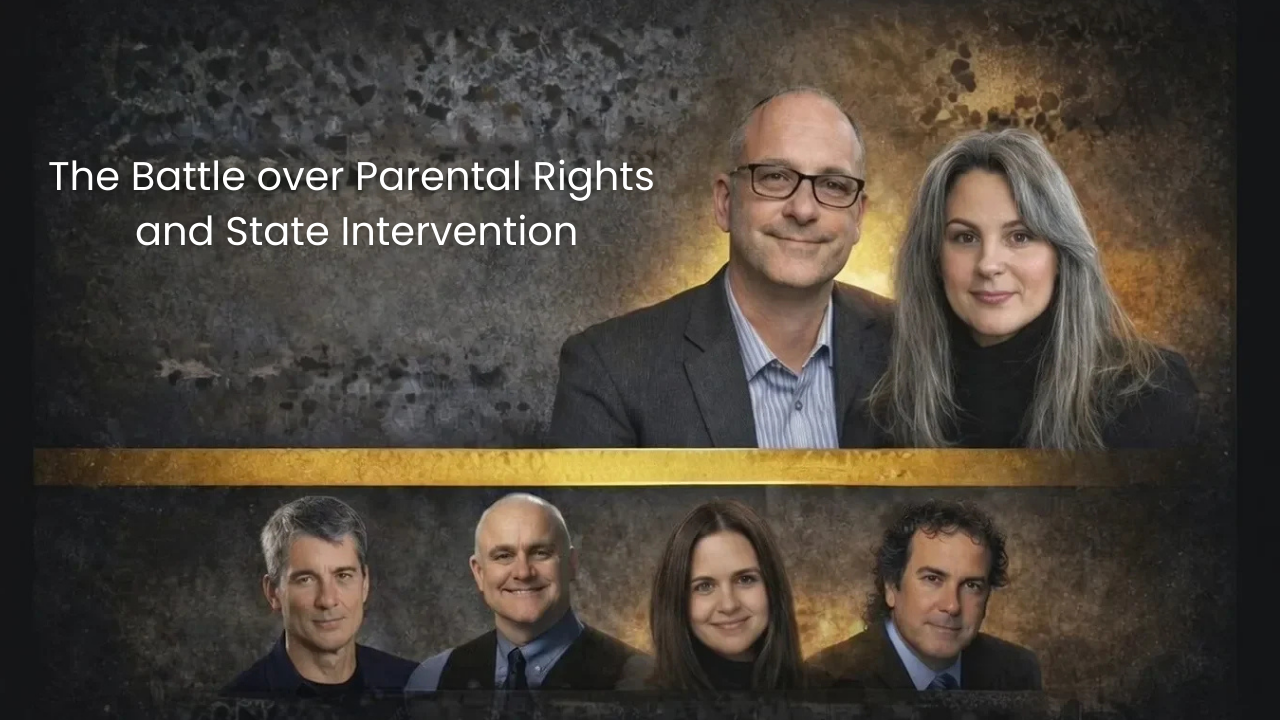
Streamed on Saturday, February 28. Hosted by Jason Lavigne and Melanie Bennet. Panelists: Professor Bruce Pardy, Leighton Grey, Mia Hughes, and Shawn Buckley. Video available below.
A heated panel discussion on the escalating conflict between parental rights and state intervention in children’s lives, especially concerning gender transition, medical decisions like puberty blockers, and school policies.
The conversation explores recent developments, including the ruling by the British Columbia Human Rights Tribunal against former trustee Barry Neufeld (fining him heavily for statements opposing gender ideology in schools), as well as Canada’s Bill C-4 for allegedly criminalizing non-affirming counseling while promoting medical transition, along with Alberta Premier Danielle Smith’s use of the notwithstanding clause to restrict puberty blockers for minors. Panelists debate when the state should step in to safeguard children from potentially irreversible treatments or parental errors, versus when it oversteps by imposing gender-affirming ideologies, restricting free speech, and/or eroding human rights frameworks. Should politicized human rights tribunals and codes be reformed or abolished to end state-funded gender medicine for youth? Given the cyclical nature of change, will younger generations drive a return to more traditional values, or will the current downward trajectory continue, intensifying dependency on government management of societal issues?
WATCH HERE
Tea & Coffee with Jay and Paula: Law professor Bruce Pardy joins the conversation to discuss Premier Danielle Smith's planned province-wide referendum on immigration and constitutional reforms, including potentially the big one: should Alberta separate from Canada? Emphasizing the Clarity Act and its core principle—voters must know exactly what they're being asked—Prof. Pardy fears adding Alberta independence to a list of questions "muddies the waters." He warns federalists will pounce on any possibility for ambiguity. Alberta doesn't have to play this game. If they want to keep things straightforward, they could hold a separate referendum just on independence and cut through the uncertainty. Smith chose not to and that has "implications, I'm afraid," says Bruce.
WATCH HERE [Begins 31:14]

From Steal to Secession AM with Professor Wall.Law professor Bruce Pardy and Calgary-based lawyer Katherine Kowalchuk explore the steps to and beyond a referendum vote for Albertan independence. Charged with a sense of urgency, they emphasize the importance of conversations now with family, friends and co-workers about the questions that will shape the future. The discussion looks at concerns within the community, such as who is speaking for whom, whether a Danielle Smith administration will carry a mandate for freedom forward, the imperative to break away from the Canada inside Alberta, and how to begin again with a brand-new design for governance.
Prof. Pardy urges Albertans to “when you’re making your way through this moment, don’t be Canadian about it. Don’t think like Canadians. You are different ... Break out! Do it your own way.”
WATCH HERE
In Lay Terms with host Peyman Askari: In this episode, Professor Bruce Pardy walks through several sections of hisgroundbreaking proposal for a new constitution for Alberta, which includes eliminating state-sanctioned professions and embracing a free-market approach to credentialing. Grounded in a deep understanding of constitutional principles, the professor’s road map also tackles the pervasive influence of corporations, which are often seen as extensions of state power. In the new society of Alberta, individuals engage directly in contracts without the need for corporate entities, liberating citizens from the constraints of intellectual property laws that stifle innovation. This bold vision extends to citizenship rules, advocating for a system that prioritizes the rights of Alberta’s citizens and their families, while limiting government overreach in immigration and population policies, including reproduction. Tune in to continue the journey of imagining what true empowerment looks like for citizens unshackled by state control.
Entrepreneur and former political candidate, Nadine Wellwood, in conversation with law professor Bruce Pardy.
According to the 1998 Supreme Court “Secession Reference,” there are no predetermined legal conclusions regarding Alberta’s potential independence, meaning all issues are open for negotiation. Independence presents a once-in-a-lifetime opportunity to create a new governance structure that corrects past wrongs, including the choice to continue existing Aboriginal rights or create a new framework. But a limitation imposed by the Alberta government, which has amended the Alberta Referendum Act to state that no referendum result can alter Aboriginal rights as guaranteed under Section 35 of the constitution, raises concerns about the government’s preemptive stance on these rights before the referendum occurs. In an independent Alberta, who will lead these negotiations? The current leadership could influence the outcomes significantly. If Alberta does not recognize its ability to make independent choices, the effort to separate from Canada may be futile, argues Prof. Pardy.
Divided into two parts, the discussion delves into the meaning of true freedom, which Prof. Pardy argues is characterized as protection from coercion or force by others, including the government. What would rights look like in such a society — where power derives from the people — and how would the legal system apply to minimize complexity, prohibit force yet allow maximum individual choice? View the second part of this conversation here.
Related Reading:An Independent Alberta Must Have a Constitution, In an Independent Alberta, Aboriginal Rights Should Not Exist, Virtue-Signalling Devotion to Reconciliation Will Not End Well, Confronting State Power.
Canada Broke the Law! Now What?
Leaders on the Frontier, hosted by David Leis, with guests Professor Bruce Pardy, Josh Dehaas of the Canadian Constitution Foundation, and Ray McGinnis (author of Unjustified). The panel examines the implications of the Federal Court of Appeal’s decision to uphold a two-year ruling that found the Trudeau government unreasonably invoked the Emergencies Act to clear the 2022 Freedom Convoy. While this is a positive outcome for freedoms and individual rights in Canada, the court’s decision does not ensure accountability for the government’s actions; political motivations could lead to similar abuses of power. The Emergencies Act was designed to address the misuse of the War Measures Act by imposing specific legislative limitations. Yet, as Prof. Pardy warns, these limitations are not constitutionally binding, meaning a future parliament could amend the act to remove them. If the Federal Court of Appeal delivered a serious decision without serious consequences, where does Canada go from here? For starters, David Leis suggests that hundreds of thousands of Canadians asking their financial institutions, “Would you debank me if the government asked you to?” could shift complacency and give the managerial state a jolt. For a deeper dive into how fast we’re sinking on that score, see Canada is an Imaginary Country (Alberta’s New Constitution), Exiting Canada's Tyranny and Redefining Freedom, and Dear Americans, Canada Is Run by Powerful Cartels.
WATCH HERE
Giving Away B.C.
The National Telegraph: Journalist (and host) Wyatt Claypool is joined by OneBC leader Dallas Brodie (MLA) and law professor Bruce Pardy to explore the real-world impacts of UNDRIP and DRIPA on British Columbia’s property rights, governance, and everyday British Columbians (who are subject to an overwhelming number of regulations—173,000—compared to other provinces). The conversation highlights growing concerns over secret negotiations, bureaucratic overreach, and policies that appear to prioritize one group while eroding individual rights—especially private property ownership. The Pender Harbour and Area Residents Association (PHARA) is actively challenging DRIPA in court, arguing that it is unconstitutional and has harmed access to essential infrastructure like docks. The experience of B.C. serves as a potent case in point to Alberta’s independence movement, and why a free Alberta should reject the idea that legal rights depend on lineage.
WATCH HERE
Tea & Coffee with Jay and Paula: Professor Bruce Pardy shared insights from his recent speech at an event in Red Deer, Alberta, on “uncomfortable truths” around freedom versus coercion, along with a panel discussion he participated in at the same event regarding consensus on bodily autonomy in relation to state authority. He warns that the example of COVID-19 served as a wake-up call for Canadians about the expansion of government authority—an authority that is difficult to reverse once powers have been granted. It is not about what, but who gets the power to make decisions, asserts Prof. Pardy, as he cautions against favoring state intervention on one issue without considering that such intervention becomes the rule rather than the exception. The wide-ranging conversation covers the Alberta independence movement and the need for open dialogue about differing views on independence while acknowledging the uncertainty involved in such a political revolution. Regarding the recent Federal Court of Appeal ruling on the Liberal government’s use of the Emergencies Act, Prof. Pardy noted that the court’s straightforward interpretation of its application was a positive outcome, but he anticipated a potential government appeal to the Supreme Court. He emphasized that the judicial review process is not about trial but about constitutional boundaries (as well as political theatre), and does not deliver the accountability people might expect from inquiries and Senate procedures.
WATCH HERE
Tea & Coffee with Jay and Paula: A recent Stay Free Alberta town hall in Water Valley marked the launch of a petition asking residents if they agree that Alberta should cease to be part of Canada and become an independent state. The event saw an impressive turnout, with 349 attendees in a town of just 225 people. The real challenge lies not with gathering signatures but the subsequent vote and how the government may respond, particularly given a recent amendment allowing them to ignore a successful referendum. The conversation highlights a lawsuit from the Sturgeon Lake Cree Nation aimed at halting the petition process. Prof. Bruce Pardy warns of ongoing legal challenges and significant resistance to the independence movement regardless of a referendum outcome, including potential claims that a national vote is necessary, complicating the path forward for Alberta's aspirations. Prof. Pardy discusses the legal hurdles the Canadian government could muster to block potential independence, including the “750 rule,” which requires seven provinces representing 50% of the population to agree to constitutional amendments. The conversation emphasizes the need for critical thinking regarding media representation at this time (the example of legal actions taken by the Sturgeon Lake Cree Nation is but one example of biased reporting by traditional media outlets).
The Lavigne Show: Host Jason Lavigne leads the charge on Alberta’s legal future, alongside law professor Bruce Pardy and Alberta’s Minister of Justice Mickey Amery, as they delve into the implications of Bill 14 for Alberta’s independence referendum and the intricate dance between federal and provincial powers, particularly in the realm of criminal law and self-defense. The government’s gun buyback program is criticized for unfairly targeting law-abiding citizens instead of addressing actual sources of crime. As the conversation opens up to address the independence referendum process, Prof. Pardy raises alarms about provisions that could allow the government to dismiss referendum results if deemed unconstitutional. The discussion underscores the complexities of Alberta’s legal landscape amid recent developments, the potential for a new partnership with Indigenous groups, and the looming question of whether a future government could derail the independence process, highlighting the tumultuous road ahead for Alberta’s aspirations of self-determination.
Professor Bruce Pardy in conversation with real estate development expertDaniel Foch: Prof. Pardy lays bare the complexities of Aboriginal title versus fee simple ownership in Canada. While some Indigenous leaders may claim they are not seeking to displace homeowners, the legal reality is that Aboriginal title could supersede existing property rights, creating a precarious situation for landowners. The B.C. government’s recent agreements with Indigenous groups have created a legal quagmire. These agreements, now constitutionally protected under Section 35, make it nearly impossible for future governments to reverse them, solidifying a situation that many see as a manufactured crisis. Real estate professionals are advised to tread carefully, as lenders and title insurers are becoming increasingly wary of properties in disputed areas. The uncertainty surrounding land titles means that buyers and sellers could face significant risks. What to do? Explore this evolving landscape with Prof. Pardy and stay informed.
Bruce Pardy on the MOU, Aboriginal Title, and What Alberta Missed! Will the push for recognition of Indigenous rights lead to a fracturing of the rule of law and societal cohesion? The current legal framework treats Indigenous peoples as a distinct group with special rights. Prof. Pardy looks at how this undermines the principle of equality before the law and why recognizing different identities perpetuates divisions, which he argues is a fundamental error in addressing land claims and rights. The culture in Canada has evolved into a new, mixed identity, he says, and the law should reflect this reality rather than cling to outdated notions of separate peoples. Prof. Pardy joins entrepreneur and former political candidate, Nadine Wellwood, to engage in a jam-packed conversation on a range of topics, from the Cowichan Tribes’ Aboriginal title ruling in Richmond, B.C., to Alberta's Memorandum of Understanding (MOU) with the Canadian federal government, and much more.
Off-Grid with Curtis Stone and guest Professor Bruce Pardy: This conversation is a clarion call for a fundamental reevaluation of how we safeguard freedom: a radical rethink of governance. Prof. Pardy discusses the ideas he presented in his new constitutional framework for an independent Alberta. Ideas that could shift the future of governance for the entire country—although Alberta is the only contender potentially bold enough to take on the challenge of reimagining the status quo. Starting from a blank slate, Prof. Pardy defines what true freedom means and how to achieve it, from capping public service salaries and limiting time in office to upending the “star chamber” that currently dominates the Supreme Court of Canada and the singular political ideology it amplifies over balanced discourse. The opportunity for greatness is on the table and the roadmap is unleashed here.
The Lavigne Show | Tea & Coffee with Paula & Jay featuring special guest Professor Bruce Pardy: The province’s new Justice Statutes Amendment Act, known as Bill 14, if passed would repeal a contentious section of Alberta’s Citizens Initiative Act, removing a significant court obstacle to independence. The bill, while seemingly positive, contains troubling provisions that grant the government increased control over referendum questions, shifting power away from the courts and the Chief Electoral Officer to Justice Minister Mickey Amery, who is also the attorney general, to modify them at will. Amery introduced Bill 14 to Alberta’s political and legal landscape on Dec. 4. Prof. Pardy highlights three central concerns with the proposed bill including its effective silencing of discussion on the future of Aboriginal rights in the context of independence. While the government would be able to sidestep constitutional challenges related to independence, it simultaneously restricts Albertans from expressing their views on critical issues, leaving Prof. Pardy to conclude: “We are still in a conundrum regarding where this government stands on Alberta independence.” The discussion also explores Canada’s single-payer healthcare system. Prof. Pardy contends that its elimination is a bare necessity for an independent Alberta: “Whenever you have government services, regardless of what they are, funded by tax dollars in the public interest, that’s socialism....If you’re determined to keep what you have, this claim that you want to be free is really not true.”
WATCH HERE
The Political Orphans with guest Professor Bruce Pardy: Do we want the state in our heads ruling over our most profound convictions? The legislative assault on faith is part of a broader social justice agenda that seeks to dismantle traditional power structures, replacing religious belief with state authority and undermining individual autonomy. Canada is on a perilous path toward a climate of censorship reminiscent of totalitarian regimes. The urgency for action is clear: without a significant shift in public awareness and political will, we risk losing our civil liberties and freedom of expression forever. Is that shift likely? No. Our best bet, argues Prof. Pardy, is Alberta succeeding in its bid for independence. Alberta represents the disruption Canada needs to take on the current political landscape and uproot the managerial state that has taken hold across the country and, soon, our sacred selves.
WATCH HERE
The Myth of Eternal Treaties & Why Alberta Independence Needs a Blank Slate
The Critical Compass podcast: Prof. Bruce Pardy sheds light on the significant hurdles facing Alberta’s quest for independence, spotlighting the legal and political challenges embedded in the Citizen Initiative Act and the Referendum Act. At the heart of the issue are Alberta’s own self-imposed restrictions, which hinder the province’s ability to pursue independence. Provisions within the Citizen Initiative Act limit the ability to propose referendum questions that could conflict with certain sections of the Constitution Act, 1982, particularly those concerning Aboriginal and treaty rights. This connection to the existing Canadian constitutional framework complicates Alberta’s negotiations for independence. Nevertheless, Prof. Pardy remains optimistic, asserting that the independence movement presents a unique opportunity not only for Alberta but for all of Canada. He urges continued public engagement and dialogue, framing these obstacles as “bumps in the road” rather than insurmountable barriers. With a call to action, Prof. Pardy emphasizes the importance of navigating these challenges to unlock Alberta’s potential for greatness.
WATCH HERE
The Notwithstanding Clause and the Alberta Teachers’ Strike | Shaun Newman podcast: Guests Caylan Ford, founder of the Alberta Classical Academy, and law professor Bruce Pardy discuss the implications of the notwithstanding clause in Canadian law, with particular context to the recent teacher strikes in Alberta. Prof. Pardy argues the Alberta government is justified in using the clause—a legitimate part of the Canadian Charter that allows legislatures to assert their authority over judicial decisions. He believes that courts have overstepped their bounds and that governments should frequently utilize this clause to maintain legislative supremacy. Ford agrees but expresses concern about the emotional distress among teachers, who feel their rights are being undermined. The discussion highlights the tension between judicial and legislative powers, with both speakers advocating for a more robust use of the notwithstanding clause to protect democratic governance. They also critique the Supreme Court’s role in interpreting the Charter, particularly regarding the right to strike, which was only recognized in 2015. Judicial activism, they say, has led to the current situation where the government feels compelled to invoke the notwithstanding clause, underscoring the need for a balance of power between the legislature and judiciary, as well as reforms that prioritize legislative authority and accountability to the electorate.
Brave New Normal with host Jason James: In a compelling and wide-ranging discussion, law professor Bruce Pardy delves into the Canadian government’s increasing tendency to manage society through a series of new bills—C-2, C-5, C-8, C-9, and C-12—legislation that reflects a broader philosophy of state control, placing power in the hands of bureaucrats, officials, and technocrats rather than adhering to established legal principles. In the example of Bill C-9 (the “Combatting Hate Act,”), Prof. Pardy asserts the shift from rule of law to the “rule of emotion” creates a subjective legal framework that could lead to a dangerous precedent of criminalizing feelings rather than actions. He warns that the increasing complexity of laws and regulations is indicative of a society in decline, where the government becomes the only answer to its own overreach, pointing to the early 1980s as the point at which Canadians began to view themselves as vulnerable individuals reliant on state protection, and the resulting complacency and lack of personal agency that besets the nation now. This mindset has been the result of a series of legislative measures that further entrench government control over citizens’ lives. What's needed, he says, is nothing short of a cultural transformation to combat the “cultural disease” that Canadians have fallen prey to. In other words: Grow Up, Canada.
A Major Hurdle in Alberta’s Path to Independence: Prof. Bruce Pardy has identified a significant legal obstacle to Alberta’s independence referendum: a provision in the province’s Citizen Initiative Act that prohibits any proposal from contravening sections 1 to 35.1 of the Constitution Act, 1982, which includes the Charter of Rights and Freedoms, and current Aboriginal and treaty rights. This means that any attempt to separate from Canada and create a new constitution would likely violate this provision, as independence inherently involves leaving behind the existing constitutional framework. Joining Tea & Coffee hosts Paula and Jay Lavigne, Prof. Pardy explores this conundrum further to discuss what the term “contravene” means, along with potential outcomes as the Alberta Court of King’s Bench considers a proposed referendum question from the Alberta Prosperity Project (APP) about Alberta becoming a sovereign country. Prof. Pardy warns that if the referendum retains existing Aboriginal rights and the Charter, it could undermine the goal of establishing a new governance framework. To truly pursue independence, Prof. Pardy insists the Alberta government must repeal the restrictive sections in both the Citizen Initiative Act and the Referendum Act. He believes these provisions hinder Albertans’ ability to make genuine choices about their governance and calls for a clearer understanding of the legal landscape to facilitate a successful referendum process.

There are still people who value civil liberties in this country.
Watch.